
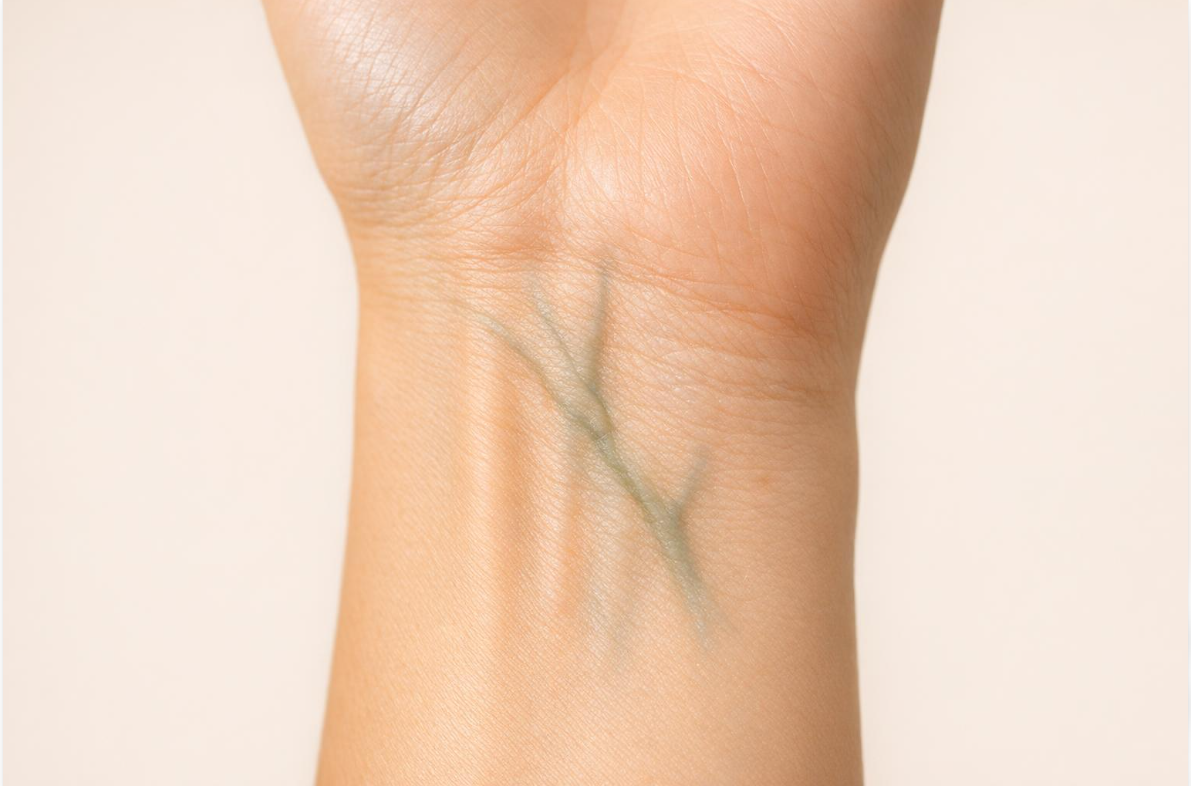
Have you ever looked at the veins on your wrist and noticed that they appear green? This simple observation can offer a helpful clue about your skin’s undertone. Understanding whether your complexion has warm, cool, or neutral undertones can make choosing foundation, concealer, lipstick, blush, and other makeup products much easier.
The green veins skin tone method is a popular beauty tip that uses the apparent color of your wrist veins to help estimate your undertone. Green-looking veins are commonly associated with warm undertones, while blue or purple-looking veins are often associated with cool undertones. If your veins appear to have a mixture of colors, you may have a neutral undertone.
However, this method is not a definitive test. Lighting, skin depth, and individual differences can affect how veins look through the skin. For a more reliable result, combine the vein test with other simple observations, including how your skin looks beside different colors and how foundation shades appear on your face.
In this guide, you’ll learn how to interpret green veins, identify your likely undertone, and use that information to make more confident makeup choices.
What Does Green Veins Skin Tone Mean?
If the veins on the inside of your wrist look green, you may have a warm skin undertone. Warm undertones often have golden, yellow, peachy, or olive qualities. The green-vein method is frequently used as a quick starting point for identifying these characteristics.
The reason this method is popular is that veins are relatively easy to observe without special equipment. You can check them in natural daylight and compare their appearance with other signs of your undertone.
Still, the color you see is influenced by the way light interacts with your skin and underlying blood vessels. Green-looking veins do not automatically mean that you have a warm undertone, and they do not establish your overall skin color.
What If Your Veins Look Green and Blue?
Some people notice both green and blue veins on their wrists. This may suggest a neutral undertone, but it is not conclusive. Your veins can also look different depending on their location, lighting, and how deeply they sit beneath the skin.
If you see mixed colors, look for additional clues. For example, compare how gold and silver jewelry look against your skin, observe your complexion in daylight, and test foundation shades along your jawline.
Can People With Different Skin Colors Have Green Veins?
Yes. People across a wide range of skin tones may notice green-looking veins. The appearance of veins alone does not determine whether your complexion is fair, light, medium, tan, deep, or dark.
The important distinction is that skin depth describes how light or deep your complexion appears, while undertone describes its subtle underlying color characteristics. Both can influence which makeup shades look harmonious.
How to Check Your Skin Undertone
The green-vein test is easy to try at home. For a better estimate, follow these steps and compare the results with other undertone indicators.
Step 1: Find Natural Lighting
Stand near a window during the day, preferably in indirect natural light. Avoid colored bathroom bulbs, strong yellow lighting, and direct sunlight that creates harsh reflections.
Lighting can change how your skin and veins appear, so use consistent conditions when comparing colors.
Step 2: Examine Your Wrist Veins
Look at the veins on the inside of your wrist or lower forearm. Do not press hard against your skin or rely on a single small vein.
Use this general guide:
| Vein appearance | Possible undertone | Important note |
|---|---|---|
| Mostly green | Warm or possibly olive | Confirm with other methods |
| Mostly blue or purple | Cool | Not a definitive result |
| A mixture of green and blue | Neutral or mixed cues | Check other indicators |
| Difficult to distinguish | Undetermined | Use other undertone tests |
These are common beauty guidelines, not medically validated diagnostic categories.
Step 3: Compare Gold and Silver Jewelry
Hold a gold-colored and a silver-colored piece of jewelry near your face or wrist. Observe which looks more harmonious with your complexion in natural light.
- Gold may complement warm undertones.
- Silver may complement cool undertones.
- Both may look equally flattering on neutral undertones.
This is a subjective styling test. Personal taste, jewelry design, and contrast can influence the result.
Step 4: Try the White Fabric Test
Hold a plain white shirt or piece of white fabric near your face without makeup. Observe your skin in indirect daylight.
Your complexion may appear more golden or peachy if you have warm undertones, pinker if you have cool undertones, or relatively balanced if you have neutral undertones.
This method is only an additional clue. Surrounding colors and lighting can influence what you see.
Step 5: Test Foundation Shades
Foundation testing is often more useful for practical makeup decisions than relying on veins alone. Select a few shades that differ in undertone and apply small swatches along your jawline.
The closest match should blend into both your face and neck without creating an obvious yellow, pink, gray, or orange stripe. Allow the product to settle according to its instructions before making a final judgment.
Warm, Cool, and Neutral Undertones Explained
Understanding the three common undertone categories helps you interpret the green-vein test more accurately.
Warm Undertones
Warm undertones may appear golden, yellow, peachy, or golden-olive. If your veins look green and your complexion also appears golden in natural light, a warm undertone may be a reasonable starting point.
Makeup shades to explore include:
- Golden or yellow-based foundation shades.
- Peach, coral, and warm rose blush.
- Peachy nude, terracotta, and warm red lipstick.
- Bronze, copper, and gold eyeshadow.
These are starting suggestions rather than strict rules. The best shades depend on your complexion depth and personal preferences.
Cool Undertones
Cool undertones may have pink, rosy, or bluish qualities. Blue or purple-looking veins are commonly associated with this category.
You might explore:
- Foundations labeled cool, rosy, or pink.
- Pink, berry, or mauve blush.
- Blue-red, berry, or cool rose lipstick.
- Silver, taupe, and cool-toned purple eyeshadow.
Not every cool-toned product will suit every person. Test shades against your skin rather than choosing solely by the label.
Neutral Undertones
Neutral undertones generally have a more balanced mix of warm and cool characteristics. You may find that both gold and silver jewelry look flattering, or that neither warm nor cool foundation shades seem quite right on their own.
Products labeled neutral may be a useful starting point. Depending on your complexion, you might also prefer a slightly warm or cool shade.
What About Olive Undertones?
Olive is another useful complexion descriptor, often associated with a subtle greenish or muted quality. Olive undertones can appear alongside different skin depths and may overlap with warm or neutral characteristics.
Some people with olive complexions notice green veins, but green veins alone do not establish an olive undertone. If many foundation shades look too pink, orange, or bright against your skin, consider testing products specifically formulated for olive complexions.
Does Skin Tone Differ From Skin Undertone?
Yes. These terms describe different aspects of your complexion, and understanding the difference can help you shop for makeup more effectively.
| Feature | Skin tone | Skin undertone |
|---|---|---|
| Meaning | The visible depth of your complexion | The subtle underlying color quality |
| Common descriptions | Fair, light, medium, tan, deep | Warm, cool, neutral; sometimes olive |
| Can it change? | May vary with sun exposure and other factors | Usually remains relatively consistent |
| Makeup relevance | Helps determine the appropriate shade depth | Helps determine the color direction of the shade |
For example, someone with a deep complexion may have a warm, cool, neutral, or olive undertone. Likewise, someone with fair skin can have any of these undertones.
This is why choosing foundation based only on whether your skin looks light or dark can lead to a poor match. You need to consider both shade depth and undertone.
Best Makeup Colors for Green Veins
If the vein test suggests warm undertones, start with makeup shades that complement golden, peachy, or warm qualities. However, there is no single palette that works for everyone with green-looking veins.
Foundation and Concealer
Look for foundation shades described as warm, golden, yellow, or peach, depending on your complexion. If your skin has an olive quality, try muted shades designed for olive undertones as well.
For concealer, choose a shade that suits your intended purpose. A concealer close to your skin tone can help cover blemishes, while a slightly lighter shade may brighten the under-eye area. Avoid choosing a shade that is excessively yellow or orange simply because your veins look green.
Blush and Bronzer
Peach, apricot, coral, and warm rose blushes are worth testing if you have warm undertones. For bronzer, choose a shade that adds believable warmth without looking muddy, overly orange, or noticeably darker than the surrounding skin.
Your natural complexion depth matters here. A soft peach may be subtle on one skin tone and much more noticeable on another.
Lipstick
Warm nude, terracotta, coral, and some warm red shades may complement warm undertones. If you prefer a natural look, choose a lipstick that enhances rather than completely changes your natural lip color.
You do not have to avoid pink, berry, or other cool shades. Makeup is also a form of personal expression, and contrast can be an intentional part of a look.
Eyeshadow
Bronze, copper, warm brown, and gold eyeshadows are useful options to experiment with. Neutral browns can also work well for everyday makeup, while deeper shades can create contrast for evening looks.
Choose shades based on the full combination of your complexion, eye color, clothing, and personal style—not just your wrist veins.
How to Choose the Right Foundation
Even if you suspect you have warm undertones, finding a good foundation match requires a little testing.
Match Your Face and Neck
Choose a shade that blends naturally along your jawline and does not leave a visible boundary between your face and neck. The best match may not be the shade you initially expect from its name or online description.
Test More Than One Undertone
Compare warm, neutral, and, if appropriate, olive options. A product labeled warm by one brand may look different from a similarly labeled shade from another brand.
If possible, test two or three shades side by side and inspect them in natural light.
Check for Oxidation
Some foundations may appear darker or change slightly in color after application. This can happen because of the formula and its interaction with skin oils and other factors.
Allow the product to settle as directed and check the match again before purchasing. Do not assume that a shade is wrong immediately after applying it.
Consider Your Skin’s Needs
Undertone matching is only one part of foundation selection. Think about your skin type, preferred finish, coverage level, sensitivity, and whether the formula works with your usual skin care routine.
For sensitive skin, check the ingredient list and follow product directions. If you experience persistent irritation, stop using the product and consider seeking advice from a qualified health professional.
Common Mistakes to Avoid
The green-vein method can be useful, but a few common mistakes may lead to an incorrect undertone guess.
Assuming green veins guarantee warm undertones: Vein color is only one clue. Combine it with jewelry comparisons and foundation testing.
Confusing a tan with a warm undertone: Skin that becomes darker after sun exposure does not necessarily have warm undertones. Skin depth and undertone are different characteristics.
Testing makeup under artificial lighting: Yellow or cool lighting can distort how foundation looks. Check shades in indirect daylight whenever practical.
Ignoring olive undertones: If warm foundations look orange and cool foundations look pink, test neutral or olive options rather than repeatedly choosing shades based on vein color alone.
Following rigid makeup rules: Undertone guides are useful for narrowing down options, not for deciding which colors you are allowed to wear. Any shade you enjoy can be part of your makeup routine.
Treating the vein test as a health assessment: Vein appearance is not a reliable way to diagnose a medical condition, determine circulation quality, or assess overall health. If a vein changes suddenly or is accompanied by pain, swelling, warmth, or other concerning symptoms, seek appropriate medical advice rather than relying on beauty guides.
Frequently Asked Questions
1. What does green veins skin tone mean?
Green-looking wrist veins are commonly associated with warm undertones, including golden or peachy qualities. However, this is only a general beauty guideline. Check other indicators and test foundation shades to get a better idea of your undertone.
2. Are green veins a sign of warm undertones?
They can be a clue, but they are not definitive proof. Lighting, skin characteristics, and the appearance of underlying blood vessels can affect how your veins look. Use the result alongside other undertone tests.
3. Can I have green veins and a neutral undertone?
Yes. Vein color does not always fit neatly into one category. If both warm and cool colors look flattering on you, a neutral undertone may be worth exploring.
4. What foundation should I use if my veins look green?
Start by testing shades labeled warm, golden, or yellow-based. If your complexion looks muted or olive, try olive-friendly options too. Choose the shade that blends most naturally with your face and neck rather than relying on the label alone.
5. Do green veins mean I have olive skin?
Not necessarily. Olive describes a complexion quality that can look subtly greenish or muted. Green-looking veins do not confirm an olive undertone, so compare foundation shades and observe your complexion in natural light.
6. Can skin undertones change over time?
Undertones are generally considered relatively stable, although the visible appearance of your complexion can change with sun exposure, skin conditions, lighting, and other factors. If your usual foundation stops matching, reassess the shade rather than assuming your undertone has completely changed.
7. Is the green-vein test accurate?
It is a convenient starting point, but it is not a scientifically definitive test. Combining several observations and trying foundation shades on your skin is more practical than relying on wrist veins alone.
Conclusion
The green veins skin tone method is a simple way to begin exploring your skin undertone. Green-looking veins are commonly linked with warm undertones, while blue or purple-looking veins may suggest cool undertones. A mixture of colors can indicate neutral characteristics, although none of these patterns provides a guaranteed answer.
For a more useful result, check your veins in natural light, compare gold and silver jewelry, observe your complexion beside white fabric, and test foundation along your jawline. If warm shades appear too orange or cool shades look too pink, try neutral or olive options.
Most importantly, remember that undertone guides are tools—not rules. The right makeup is the makeup that complements your complexion, suits your preferences, and makes you feel comfortable and confident.
